


Two-Way Radio System Design & Engineering in Nashville & Middle Tennessee
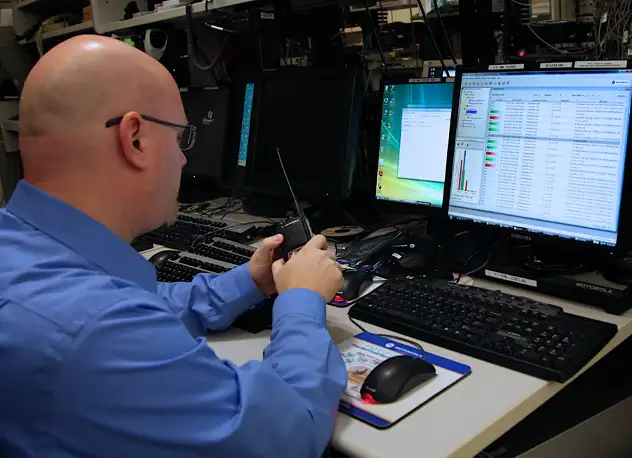
Reliable Communications Start With the Right System Design
Even the best radio can't make up for a communications system that wasn't designed for the environment it has to work in.
Buildings, terrain, distance, number of users, frequencies, infrastructure and day-to-day operations all affect radio coverage and system performance.
Nashville Communications provides professional two-way radio system design and engineering across Nashville and Middle Tennessee, helping businesses, public safety agencies, utilities, schools, healthcare organizations, manufacturers and others build communications systems around the way their people actually work.
From a single facility to a multi-site or wide-area network, we can take your project from first requirements through design, installation, programming, testing and long-term support.
Start With the Coverage Requirement, Not the Radio
Every successful communications project starts by answering a few basic questions:
- Where do your people need to communicate?
- Where does your current coverage work?
- Where does it fail?
- Are users inside buildings, outdoors or both?
- How many people and departments need to communicate?
- Are multiple locations involved?
- Will users travel between coverage areas?
- What infrastructure is already in place?
- How much capacity do you need today?
- How might the system need to grow?
We use the answers to determine the right combination of radios, infrastructure and system architecture.
The aim isn't to sell you more equipment. It's to design a communications system that works wherever your people need it.
System Design Built Around Your Operation
No two communications environments are the same.
A manufacturing plant may have steel structures, heavy machinery and high-noise areas. A hospital may need coverage across several floors and buildings. A utility may have crews spread across a wide service area. A school district may need communications across multiple campuses.
That's why we evaluate your operating environment before recommending a solution. System design can take into account:
Coverage
Identify where communication is needed and pinpoint obstacles or coverage gaps.
Capacity
Assess the number of users, departments, talkgroups and expected radio traffic.
Infrastructure
Define the repeaters, base stations, antennas, network connections and related equipment you need.
System Architecture
Choose the right architecture for single-site, multi-site, wide-area or higher-capacity communications.
User Requirements
Consider how each department communicates and which users need to reach each other.
Future Growth
Design with expansion in mind so today's system doesn't hold back tomorrow's operation.
From Single-Site Coverage to Wide-Area Communications
We design communications systems for a wide range of operating environments.
Single-Site Radio Systems
For organizations working mainly within one facility, campus or local area, we design a system around the indoor and outdoor coverage you need.
Multi-Site Systems
When staff need to communicate across several buildings or separate locations, we connect your radio infrastructure into a wider network.
High-Capacity Radio Systems
Organizations with larger fleets, multiple departments or heavy radio traffic can benefit from trunked systems that make better use of available channels.
Wide-Area Communications
For teams working across communities, service areas or multiple facilities, we design wide-area systems using multi-site radio infrastructure and broadband technology.
Learn More About Our Wide Area Communication Systems
Motorola MOTOTRBO™ System Architecture
As a Motorola Solutions partner, Nashville Communications designs systems using the MOTOTRBO architecture that best fits your coverage, capacity and operational needs.
Conventional MOTOTRBO
Professional digital radio for organizations that need dependable local communications without a more complex trunked system.
IP Site Connect
Link geographically separate radio sites over an IP network to extend coverage across multiple locations.
Capacity Plus
A single-site digital trunking solution for organizations that need more capacity and more efficient use of radio resources.
Capacity Plus Multi-Site
Combines multi-site coverage with digital trunking for organizations that need both wider coverage and greater capacity.
WAVE PTX™
Extend push-to-talk beyond your radio network to compatible smartphones, tablets and broadband devices. WAVE PTX works with MOTOTRBO Capacity Plus, Capacity Max and IP Site Connect, so broadband and radio users can talk to each other.
Not sure which architecture you need? That's our job.
Tell us where your people work, how they communicate and where your current system falls short, and we'll help you find the right way forward.
Engineering the Complete Radio System
Two-way radio performance depends on much more than portable and mobile radios. We design and integrate your whole communications environment, including:
- Portable two-way radios
- Mobile two-way radios
- Repeaters and base stations
- Antennas and RF components
- Radio site infrastructure
- Feedlines and cabling
- Dispatch solutions
- IP-connected radio sites
- GPS and location features
- Broadband push-to-talk
- Radio programming and talkgroups
- FCC licensing
- Power and backup systems
- System monitoring
- Network connectivity
By planning these components together, we reduce the risk of ending up with a system built from individual products that were never meant to work as one solution.
From Design to Deployment
One Partner From the First Coverage Question to Final Testing
A system design only delivers value when it's implemented correctly.
We can stay involved throughout your project, keeping the finished system true to your original communications requirements.
- Assess – Review your operation, users, facilities, existing equipment, coverage challenges and communications goals.
- Design – Develop the right coverage, infrastructure and system architecture around those requirements.
- Configure – Program radios, channels, talkgroups and system equipment around how your people need to communicate.
- Install – Professionally install repeaters, base stations, antennas, mobile radios and other infrastructure.
- Test – Verify the system is operating and performing as intended.
- Support – Provide maintenance, repair, programming changes, system expansion and ongoing technical help.
Professional Installation Matters
Even a well-designed system can underperform if the infrastructure isn't installed correctly.
We provide professional installation for radio equipment and supporting communications infrastructure, including:
- Portable radio fleet deployment
- Mobile radio installation
- Repeater and base station installation
- Antenna installation
- Cable routing
- Infrastructure installation
- Equipment configuration
- Radio programming
- System testing
Every installation takes into account equipment placement, RF performance, accessibility, cable routing, power, connectivity and future serviceability.
Learn More About Our Installation Services
RF Infrastructure
Radio coverage often depends on infrastructure beyond your own building.
Our capabilities extend to the RF systems that support your communications network, including:
- Antenna installation
- Feedline and coax
- Repeater infrastructure
- Microwave and backhaul
That lets us treat the radios and RF infrastructure as parts of one communications system.
Programming Designed Around How Your Teams Communicate
Radio programming should reflect how your organization really works. We configure radios and systems around:
- Departments
- Workgroups
- Channels and talkgroups
- Individual and group calling
- Emergency requirements
- Multiple sites
- User roles
- Existing radio fleets
- Future expansion
As your organization changes, we can review and update programming so your fleet keeps pace with how your teams operate.
System Testing & Optimization
Installation Isn't Finished Until the System Is Tested
Once your system is installed and configured, we verify equipment operation and system performance. Testing helps identify:
- Coverage problems
- Programming issues
- Antenna or connection faults
- Equipment configuration issues
- Unexpected communication gaps
- Areas that need further optimization
For existing systems, testing can also pinpoint whether a problem lies with individual radios, infrastructure, antennas, programming or the overall system design.
More Than System Design
Your communications system has to perform long after the design and installation are complete. We support the full system lifecycle with services including:
- Equipment repair
- Bench diagnostics
- Preventive maintenance
- Radio programming
- Firmware updates
- Battery and accessory testing
- Antenna and connection checks
- System troubleshooting
- Infrastructure maintenance
- System upgrades and expansion
- Emergency support
Explore Our Maintenance Agreements
Design for Today. Plan for Tomorrow.
Communications needs rarely stay the same.
Organizations hire more people. Facilities expand. New buildings open. Departments change. Coverage needs grow. Older equipment reaches end of life.
We help you look beyond the immediate purchase and plan where your communications system may need to go next. That could mean:
- Expanding Coverage – Add infrastructure or sites as your operating area grows.
- Increasing Capacity – Move to an architecture that supports more users and more radio traffic.
- Connecting Locations – Bring separate facilities into one communications environment.
- Adding Broadband Users – Use technologies like WAVE PTX to connect radio users with smartphones and broadband devices.
- Modernizing Existing Systems – Plan a practical migration from aging infrastructure to newer technology.
The goal isn't to overbuild your system today. It's to avoid designing a system that holds you back tomorrow.
System Design & Engineering Across Middle Tennessee
Since 1983, Nashville Communications has provided communications system design, installation and technical support throughout Nashville and Middle Tennessee, from individual radio fleets to complex multi-site systems. Local support is available from our three offices:
Nashville Office
330 Plus Park Boulevard, Nashville, TN 37217
615-255-5670 · Mon–Fri 8:00 AM – 5:00 PM
Cookeville Office
216 West Spring Street, Cookeville, TN 38501
931-528-7070 · Mon–Fri 8:00 AM – 5:00 PM
Murfreesboro Office
1418 Mark Allen Lane, Murfreesboro, TN 37129
615-255-5670 · Mon–Fri 8:00 AM – 5:00 PM
Frequently Asked Questions
What is involved in designing a two-way radio system?
System design can involve assessing required coverage, number of users, radio traffic, frequencies, facilities, terrain, existing infrastructure, repeaters, antennas, network connectivity and future expansion plans.
Can you evaluate our existing radio coverage?
Yes. We can review your current communications setup and coverage challenges to identify possible improvements.
Can you design communications between multiple locations?
Yes. We provide multi-site and wide-area solutions for organizations whose people need to communicate across separate facilities or larger service areas.
What is the difference between IP Site Connect and Capacity Plus?
IP Site Connect mainly extends MOTOTRBO communications across multiple radio sites. Capacity Plus is a trunked system that provides more capacity and makes more efficient use of radio resources at a single site. Capacity Plus Multi-Site combines wider coverage with trunking.
Can you design and install the entire system?
Yes. Our capabilities include system evaluation, design, radio programming, mobile installation, antennas, repeaters, system testing and ongoing support.
Can you support the system after installation?
Yes. We provide repair, preventive maintenance, programming, troubleshooting and other ongoing technical services.
Don't Design Your Communications System Around a Coverage Problem
If you're dealing with dead zones, outgrowing your current radio system, adding locations or planning an upgrade, start with your communications requirements, not a product list.
We'll look at where your people work, where they need coverage, how many users need to communicate and how your system may need to grow, then design the infrastructure and technology around those needs.
Let's Design a System That Works Where Your People Work
Whether you need reliable communications across one facility or a multi-site network connecting teams across Middle Tennessee, we can take your project from first assessment through design, installation, testing and long-term support.